

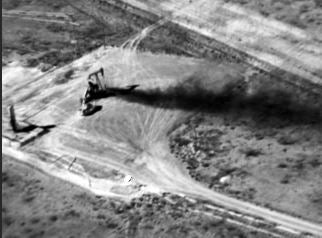
 The U.S. Supreme Court docket’s current local weather change ruling has sadly restricted the instruments obtainable to EPA in its effort to handle local weather air pollution from energy crops. Nonetheless, it’s additionally essential to acknowledge that the ruling under no circumstances modified EPA’s longstanding authority and obligation to handle local weather air pollution beneath the Clear Air Act to handle local weather air pollution itself — together with from new vehicles and freight vehicles, industrial sources, new and present energy crops, and oil and fuel improvement. And with respect to grease and fuel air pollution, this choice under no circumstances impedes the company’s ongoing and essential efforts to cut back oil and fuel methane air pollution.
It stays important that the EPA train its clear authority and obligation to maneuver ahead with protecting local weather requirements, together with its proposed guidelines to curb methane air pollution from the oil and fuel sector, which emits roughly 16 million tons of methane yearly. Globally, methane from human sources is chargeable for over 1 / 4 of the warming we’re experiencing as we speak.
EPA’s authority to deal with methane air pollution was reaffirmed by bipartisan majorities in Congress simply final 12 months, and the company has commonsense, cost-effective instruments at hand to handle the well being harms posed by oil and fuel methane air pollution, which within the U.S. alone has the near-term local weather influence yearly of 294 million passenger automobiles.
In wake of Supreme Court docket ruling, we should go full steam forward to cut back methane air pollution Click on To Tweet
Commonsense and cost-effective options
Actions to curb oil and fuel methane emissions are among the many quickest, most cost-effective methods to handle air pollution that threatens the well being of 9 million Individuals residing inside a half mile of an lively oil or fuel website.
As a result of methane is the principle element of pure fuel, a saleable power useful resource, operators are in a position to get rid of many emissions at little to no web value, and sometimes flip a revenue from implementing options.
Based on the IEA, almost half of emissions may very well be addressed at no web value. As well as, evaluation by Rystad Power discovered that options for operators to finish the follow of routine flaring — a big supply of methane air pollution — are broadly obtainable and overwhelmingly cost-effective.
Many firms, starting from international supermajors to unbiased operators, have voiced help for methane requirements and are already implementing these options. Current analysis additionally underscores the dramatic development within the U.S. methane mitigation business, which has over 1,000 worker places throughout the nation making options to seek out and repair emissions accessible to operators.
Moreover, main power producing states like Colorado and New Mexico are demonstrating how sensible and cost-effective methane safeguards are, with each states having enacted strong guidelines that deal with emissions from smaller wells with leak-prone gear and finish the follow of routine flaring.
Upcoming EPA requirements for the oil and fuel sector, which construct on comparable guidelines enacted by EPA in 2016, ought to leverage these widely-used and cost-effective options.
Clear authority and obligation for EPA to handle local weather air pollution, together with motion on methane
Below the Clear Air Act, EPA has clear, longstanding authority, and duty, to set requirements to handle local weather and different dangerous air pollution, together with from the oil and fuel sector. In truth, EPA first acknowledged the dangerous impacts from the oil and fuel sector in 1979 and issued its first requirements addressing the sector’s emissions in 1985.
Methane is a robust greenhouse fuel and the oil and fuel sector is its largest industrial supply within the U.S. Recognizing this, EPA issued methane requirements for brand new oil and fuel sources in 2016.
Following this lengthy historical past of requirements lowering air pollution from these sources, EPA’s obligation to handle methane air pollution from oil and fuel was reaffirmed by bipartisan majorities in Congress simply final 12 months with a Congressional Overview Act decision restoring direct methane regulation beneath part 111 of the Clear Air Act.
In an amicus transient within the Supreme Court docket’s local weather case, members of Congress defined that the CRA decision underscores “EPA’s statutory obligation to manage present oil and fuel sources beneath Part 111(d).”
Supreme Court docket ruling doesn’t change path ahead for EPA motion on oil & fuel methane
This local weather change case doesn’t have an effect on EPA’s potential and obligation to swiftly deal with local weather air pollution, and methane air pollution from the oil and fuel business isn’t any exception. Certainly, the bulk opinion acknowledges EPA authority to handle local weather air pollution beneath part 111 and defined that the company should regulate present sources as soon as it set requirements for brand new services.
Whereas the opinion does constrict EPA’s potential to make use of a few of the most cost-effective instruments obtainable to handle local weather air pollution from present energy crops — even because it reaffirmed EPA’s authority and duty to restrict that air pollution — and concerningly give prominence to the newly invented and ambiguous “main questions doctrine,” the problems within the case that the courtroom discovered problematic aren’t related to the EPA’s proposed oil and fuel methane guidelines.
Certainly, the technology-based and source-focused air pollution safeguards EPA has proposed for the oil and fuel sector are the very sorts of requirements the Court docket acknowledged as squarely inside EPA’s longstanding authority beneath the Clear Air Act. EPA should transfer ahead and swiftly deal with local weather air pollution and should finalize methane protections throughout the oil and fuel sector to guard public well being and welfare.

.jpg)


0 Comments