

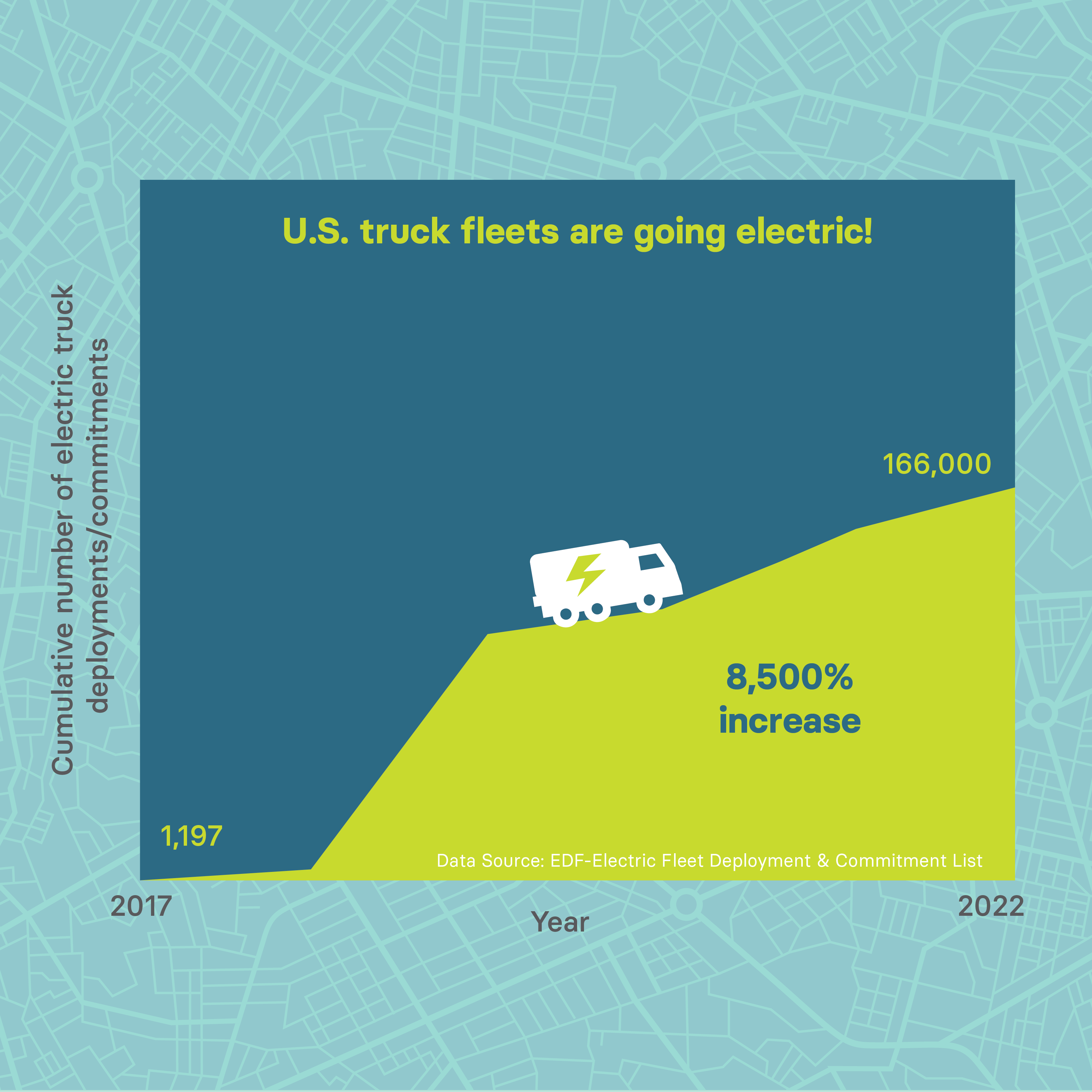
 Business U.S. fleets are going large on electrical vans, in response to a brand new EDF evaluation of sophistication 2b-8 fleet bulletins, which finds a virtually 8,500% enhance in zero-emission fleet deployments and commitments since 2017.
To reach at this eye-popping stat, EDF tracked public bulletins of main fleet commitments to deploy zero-emission vans, in addition to precise deployments (vans on roads).
The current inflow of those automobiles — most of that are electrical — is a vital step towards lowering the health-harming, local weather change air pollution from diesel vans and a key indicator of a flourishing market. However extra ambition from policymakers is required if we’re going to obtain 100% zero-emission truck gross sales by 2035 — a vital date to make sure a near-zero-emission transportation sector by 2050.
What’s behind the expansion in zero-emission vans?
Due to the declining upfront price of zero-emission vans and their related fueling infrastructure, elevated mannequin availability, improved vary, and sturdy authorities and utility incentives, business and municipal fleets of all sizes and obligation cycles are deploying and making commitments to deploy zero-emission vans. All of this progress is shifting zero-emission vans from the showroom ground to highways and native streets throughout America.
Market readiness for a ZEV future is right here: An 8,500% enhance in truck deployments is proof. Click on To Tweet
EDF’s evaluation finds that just about 200 fleets have made commitments to deploy or have deployed zero-emission vans — a virtually 1100% enhance since 2017. Whereas the majority of demand is presently coming from giant personal and public entities, like Amazon and the US Postal Service, fleets of all sizes are starting to make the transition from diesel to zero-emission vans.
Whereas the shift from gas- to diesel-powered vans took over 40 years to succeed in 90% gross sales, the transition from diesel to zero-emission vans has the potential to occur a lot faster based mostly on the technological readiness of and fast enhance in zero-emission vans. The speed of transition, nonetheless, is way behind what’s essential to mitigate the dangerous local weather and well being impacts of diesel vans. Underneath present charges of electrification, solely 29% of medium- and heavy-duty automobiles shall be zero-emission by 2050, in response to BloombergNEF evaluation.
Diesel vans are devastating communities
Medium- and heavy-duty automobiles account for simply 5% of automobiles on U.S. roads, however are answerable for practically 1 / 4 of all local weather air pollution and practically half the deaths from air air pollution linked to transportation. Individuals of shade and people with decrease incomes bear this well being burden disproportionately. In line with the American Lung Affiliation, individuals of shade are greater than three and a half instances extra more likely to breathe essentially the most polluted air when in comparison with white individuals.
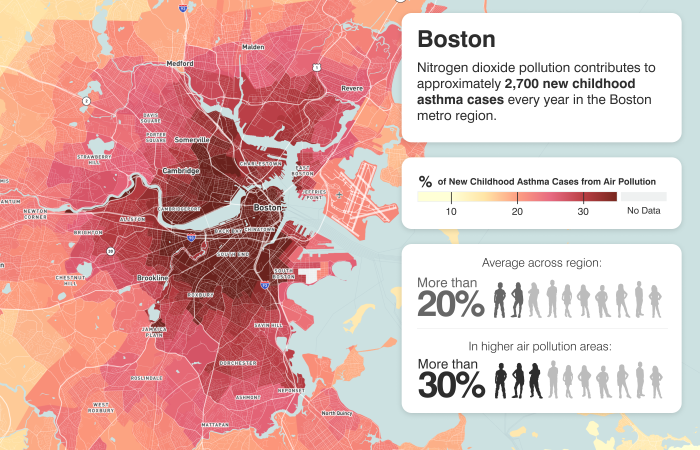
Lengthy-term publicity to soiled truck air pollution can have devastating well being impacts on essentially the most susceptible members of our communities. For instance, EDF evaluation of current air high quality analysis estimates that on common 1 in 5 circumstances of latest childhood bronchial asthma are attributable to air pollution in Boston – however within the neighborhoods with essentially the most traffic-related air pollution, it may be as much as 1 in 3.
Authorities motion is crucial
Whereas the current progress in fleet commitments and deployments is spectacular – and an essential indicator of the place the truck market is headed – state and federal policymakers must allocate extra sources to make sure fast, equitable progress. The local weather and well being crucial we face calls for it.
To speed up this transition and guarantee we’re maximizing the well being, local weather and financial advantages of this paradigm shift, policymakers should create:
- Lengthy-term emission requirements for medium- and heavy-duty automobiles: To offer market certainty for future investments in zero-emission vans, state and federal policymakers should set up a pathway to 100% gross sales of latest zero-emission vans and buses by 2035 and, within the interim, enact insurance policies that curb dangerous diesel emissions.
- Clear, reasonably priced charging infrastructure: Complexities round charging nonetheless stay a big barrier to wide-scale EV adoption, and that is very true for vans. The lately handed Infrastructure Funding and Jobs Act incorporates $5 billion for charging infrastructure. States must leverage this funding and develop infrastructure packages that mirror the distinctive wants of electrical vans.
- An equity-centered method to deployment: Deployment of charging stations and zero-emission vans must be prioritized in low-income, pollution-burdened communities first, the place the air high quality advantages of zero-emission applied sciences are wanted most.
By quickly taking these steps, policymakers can construct on the thrilling momentum we’re seeing within the zero-emission truck market and unleash widespread adoption of those life-saving, climate-protecting vans.

.jpg)


0 Comments