

[ad_1]
Hello all Readers, welcome back, at www.tipstoppk.blogspot.com, please like comments and share...
It’s been half a decade for the reason that begin of GreenBiz Group’s Rising Leaders program, which has the objective of supporting college students and younger professionals who determine as Black, Indigenous or an individual of coloration and are working to turn out to be sustainability leaders of the long run.
With the entire cohorts that I’ve had the privilege of assembly, two traits they’ve in widespread is their need to deal with local weather change and their push to make the sustainability discipline extra inclusive and bold in its actions.
In our final Rising Leaders piece, I wrote, “For the enterprise neighborhood, local weather motion requires listening to and studying from each other.” That features studying from the youthful individuals within the rooms, as nicely. The Circularity 22 Rising Leaders cohort was made up of 10 college students and younger professionals — based mostly in cities throughout america, plus Vancouver, British Columbia. And their experience comes from a wide range of areas: engineering; reuse; and trend, to call a couple of.
We requested them, “What do you assume is lacking from conversations concerning the round economic system and company motion (utilizing round economic system rules) on addressing the local weather disaster?”
Listed below are their responses, in alphabetical order by final identify, and flippantly edited for readability.
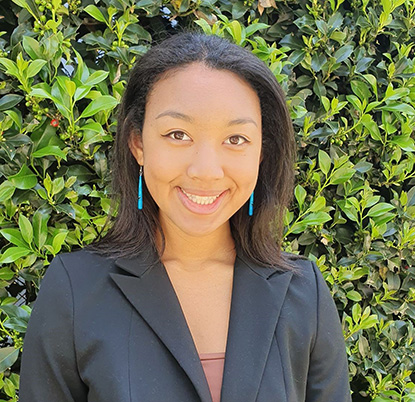
Fatima Abdul-Khabir
Researcher at Lawrence Berkeley Nationwide Laboratory
A round economic system and a sustainable future can’t be achieved if the company world stays working inside silos of [diversity, equity and inclusion], environmentalism and monetary planning. These ideas usually are not mutually unique in actuality and should be addressed collaboratively within the company area, each internally throughout departments and within the bigger business. Conferences like Circularity 22 are an ideal area to spark this collective pondering, nevertheless it must be backed with motion on these essential subjects.
I problem each head of sustainability, ESG analyst or lead experimenter to convey the notion of circularity out of abstraction and into motion. Schedule a gathering along with your firm’s DEI staff to have a essential dialogue on how a transition to a round economic system may be equitable and inclusive of marginalized communities. Interact with these answerable for budgeting and planning the subsequent steps in your firm to determine a baseline and map out what a path to circularity would seem like. And share what this collaboratively designed imaginative and prescient of circularity appears like in your firm with management so you possibly can garner the assist to actually begin reworking. These are my ideas, however as an knowledgeable of your organization, what do you assume YOU can do to get the wheels shifting on circularity?

Eugena Choi
Environmental and Sustainability Research and Environmental Engineering Scholar at Worcester Polytechnic Institute
Since we live in a world the place prior assumptions about environmental circumstances are now not legitimate, I consider we should reimagine circularity rules to contain beforehand unheard or erased voices. Extra particularly, I feel giving environmental justice a bigger platform and bringing extra consciousness to it’s a essential piece in conversations concerning the round economic system and company motion. Offering marginalized communities the voices they deserve in talks about methods change and a regenerative future is necessary to guiding the round framework. I consider their tales, considerations and data drive the sustainability agenda and can’t be regarded over or abused. These communities, often comprised of nations within the International South, have constantly suffered from our present financial mannequin and haven’t had correct illustration in world discussions.
Whereas I used to be capable of interact in eye-opening discussions and find out about how corporations are working in direction of extra sustainable practices, I used to be most impacted on the final day of the convention, the place I attended the “Justice-Centered Methods: Regenerating Communities via Financial Inclusion” breakout session. One of many panelists, Michelle Wiseman [director of waste diversion and outreach at the city of Atlanta/Mayor’s Office of Resilience], acknowledged that traditionally, when large firms come into individuals of coloration (POC) communities, they’re extractive and arrive with an agenda to function this fashion. Nonetheless, their agenda overlooks the wants of those communities and places them second. It turned obvious after listening to her and the opposite panelists discuss their real-life experiences with environmental justice in their very own cities {that a} true round economic system can’t be achieved with out together with and lifting marginalized voices.
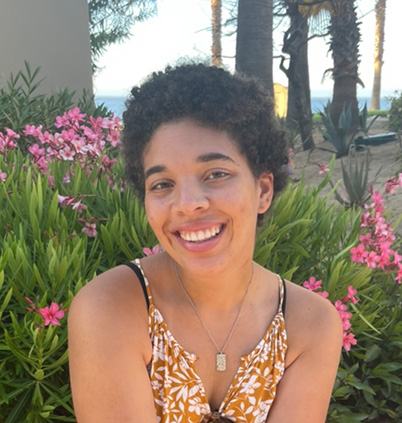
Korrin Davis
California Sea Grant State Fellow on the California Coastal Fee
I feel what’s lacking from the round economic system and company motion dialog is genuine partnerships with individuals and locations. Utilizing round economic system rules to deal with the local weather disaster is essential, although remoted efforts usually are not sufficient. The dialog wants to maneuver past buzzwords akin to “fairness” and “justice,” and firms have to do the work to authenticate these claims. Participating with native communities which are bearing the brunt of injustice, investing straight into grassroots efforts and hiring neighborhood leaders and Black, Indigenous and other people of coloration (BIPOC) people who’ve vested pursuits on the native degree are among the methods during which this may be executed.
As an alternative of asking, “How can we assist this neighborhood?”, the query must be directed on the neighborhood itself to study what it needs or wants. Creating options for weak communities that can’t actively take part doesn’t handle the local weather disaster. The hassle must be collaborative and transfer past simply bridging a spot in assets to enact system-wide change. A round economic system can’t exist if half of the neighborhood is unable to have interaction. These conversations are starting to happen, however not on the velocity or scale that’s wanted to successfully revolutionize the economic system right into a round one.

Hannah George
Environmental and Sustainability Research and Enterprise Scholar at Worcester Polytechnic Institute
Attending Circularity 22 as an Rising Chief was an eye-opening expertise into the conversations which are occurring concerning the round economic system at a company degree. I attended panels and networked with professionals about what their corporations are doing to comply with the rules of a round economic system.
There’s nice progress being made relating to a round economic system. I consider there’s a lack of dialog about incorporating social justice into the actions taken by firms. The primary session I attended on the convention was “The Race to 2025: Reaching Plastics & Packaging Targets.” Throughout this session, I realized how rePurpose International is working with corporations in utilizing plastic credit to fund waste administration infrastructures in communities across the globe. One neighborhood they put money into is Malappuram, a metropolis within the state of Kerala, India, the state my household is from. I used to be ecstatic to find out about how an organization is stopping plastic air pollution in a location that’s dwelling to members of my family. I believed it was an ideal step within the path of the round economic system precept to remove waste and air pollution. Waste administration infrastructures across the globe should be improved, however for communities like in Malappuram, creating a powerful waste administration system is tough with out correct funding. Local weather change is a worldwide subject and by incorporating social justice into the CSR objectives of corporations, I consider efficient motion may very well be taken to assist communities which are impacted closely by air pollution that they didn’t contribute to.

Gabriela Mateo-Saja
MBA, Sustainability Candidate at Bard School
Coverage engagement and actions in favor of a simply transition to the round economic system.
Throughout Circularity 22, I keep in mind a recurring query was the right way to contain coverage within the transition to a round economic system, contemplating the wheels of presidency transfer too slowly to enact the extent of motion wanted to forestall the worst outcomes globally. There’s a want for extra intensive efforts to deal with this problem as aggregated steps will create longer-lasting impacts. How can we co-create concentrated efforts that design community-focused methods handy to the on a regular basis shopper adjoining to vital coverage reforms?
There have been additionally many conversations about envisioning a simply transition. Two of my favourite questions from the convention had been, “How nicely have you learnt your provide chain?” and “Are you able to identify your waste pickers?” I want to see corporations turn out to be extra concerned on this transition via partnerships that assist skill-building for a greener economic system and investing capital in a future that will probably be worthwhile in the long run. Firms ought to take accountability for the hurt they’ve brought on and work with these stakeholders to erase dangerous operations and collaboratively create higher methods. Spend money on and empower your present workforce. And begin investing in packages that may construct the subsequent era of numerous and modern leaders within the round economic system.

Laura McAlister
Environmental Engineer at LA Sanitation & Surroundings
For the reason that Industrial Revolution, the connection between business and nature has been parasitic, during which one advantages and the opposite is harmed. The Industrial Revolution began a fossil fuel-based economic system, the place a excessive quantity of supplies had been made or run by fossil fuels. This led to excessive environmental devastation as demand elevated industries, creating huge air pollution, excessive quantities of waste and exhausted Earth’s assets.
As a complete, we have to shift away from a consumerism mindset. That is achieved via producing high-quality merchandise which are sturdy, reusable, made to be made once more, safely recycled and include renewable inputs. Altering the best way firms conduct enterprise first requires modifications to how we promote, make and purchase every part. In Janine M. Benyus’ e book, “Biomimicry: Innovation Impressed by Nature,” she mentioned the ten commandments of the redwood clan, that are pure methods [“adopted by all complex, mature ecosystems“]. They will help in making a extra round company/group. Listed below are six of the ten:
- Use waste as a useful resource
- Diversify and cooperate to totally use the habitat
- Collect and use vitality effectively
- Optimize quite than maximize
- Don’t foul their nests
- Store regionally

Christina Michalski
M.S. in Sustainability Administration Candidate at Columbia College
There’s so much lacking. Political will, fairness and inclusion, a extra bold mindset. Fairly truthfully, as a teen within the sustainability area, it may be irritating fascinated with the complacency of the present second. So just lately, I’ve begun pondering as a substitute a few completely different and extra productive query: How will we advance the dialog? How will we come again to subsequent 12 months’s Circularity convention with a larger, stronger and extra numerous coalition?
I consider for the time being, the round economic system dialog is perched on the excessive macro-level or within the halls of academia. Even those that are conscious of the time period and what it represents see it as some form of pipe dream — as represented in Circularity 22 when one speaker commented that we must always accept “semi-circles” as a substitute of a real round equitable economic system. Continually, I felt the conversations had been cloaked in buzzwords and that the large issues had been typically decreased to catchy soundbites.
Nonetheless, there have been definitely some particular moments the place passionate conference-goers reset the tone. I obtained to listen to BanQu CEO Ashish Gadnis gush about how casual waste collectors in South Africa are breaking the cycle of poverty whereas rising recycling charges. Erica Nunez, a program officer on the Ocean Basis, obtained candid about all of the frustrations and struggles within the run-up to gaveling the historic world plastic treaty. Co-founder and Managing Director of the HBCU Inexperienced Fund Felicia Davis additionally shared her deep financial institution of information on the right way to meaningfully combine range into public-private partnerships. And there have been so many others — different audio system, fellow attendees and (particularly) the younger Rising Leaders and younger volunteers — who had been brimming with ardour concerning the transformations underway across the round economic system.
Herein lies a part of the reply on how we transfer the round economic system dialog ahead. We want ardour, authenticity and connection to a deeper function. One of the best conversations I had had been when individuals might join their very own high-level imaginative and prescient of a round economic system with the realities and livelihoods of on a regular basis individuals. It’s thrilling! As an business, we should transfer away from abstractions and ditch the company jargon in how we discuss concerning the round economic system. We should be actual with ourselves to make the round economic system actual for others. This implies increasing who’s a part of the dialog, elevating the tales and the work of the distinctive individuals on the bottom — even acknowledging there will probably be some stress and disagreement. As an illustration, some round economic system insurance policies may hinder fairness and justice due to affordability or different constraints. Are we keen to make that tradeoff?
It received’t be simple however solely by increasing who’s represented in these conversations can we inch nearer to our imaginative and prescient of a extra simply, inclusive world.

Srishti Srivastava
M.S. Sustainability Administration Candidate at Columbia College Local weather Faculty
In discussions with so many achieved professionals at Circularity 22, I felt like my thoughts was always being engaged to assume via the robust questions on sustainability. Integrating a round economic system into an already established linear economic system is a frightening problem however one that’s undoubtedly doable if we take fast motion based mostly on these conversations we’re having.
In a society that’s inherently pushed by financial progress and revenue era, I felt like there was a vital level lacking from most conversations: to make one thing new is in itself unsustainable. For round concepts and rules to turn out to be mainstream, we have to discuss not simply improvements round redesigning merchandise however concerning the way of life modifications that all of us have to collectively think about to scale back our consumption.
I additionally discovered it attention-grabbing how so many corporations had been centered on reaching web zero or on merely lowering emissions. Whereas I don’t wish to discourage necessary progress for the sake of perfection, I discovered myself fascinated with why the goal for many corporations was merely to return to a baseline to solely keep away from the worst results of local weather change, quite than specializing in being web optimistic and really innovating to provide extra again than was taken. It’s as round economic system knowledgeable William McDonough at all times says: We have to do extra good, not much less dangerous.

Sophia Yang
Founder and Govt Director of Threading Change
For me, what’s lacking in our conversations concerning the round economic system is that we’re nonetheless having these conversations via a lens that’s deeply rooted in colonialism. Within the case of trend, clothes manufacturing is generally produced in nations which are getting previous colonialist rule: Bangladesh, India, Hong Kong and China. Clothes donations are going to nations the place they don’t have the infrastructure set in place to essentially reject them, such because the Katanmanto market in Ghana.
We can’t solely use westernized options in round economic system options. For many years, the western sustainability narrative has centered on: “How will we purchase into sustainability, to drive influence? What’s the triple backside line?” These usually are not the one questions we have to concentrate on. We should be centering BIPOC communities, whose tradition has at all times had a symbiotic relationship with the pure world, who’ve been practising ideas of the round economic system and round relationships for hundreds of years, earlier than it turned a Westernized “marketable” aesthetic. Circularity within the trend business is one during which waste and air pollution are designed out, merchandise and supplies are stored in use for so long as doable, together with via reusing and recycling, and the place pure methods are regenerated.
That is the place Threading Change is available in. We’re a youth-led nonprofit centered on embedding intersectionality and circularity within the trend business.
Our mission drives us day by day, the 6Fs: working for a feminist, fossil-fuel-free trend future. We work on the intersections of shopper schooling and business transformation via our tri-impact mannequin of schooling, modern storytelling and coverage analysis.
[ad_2]





0 Comments