

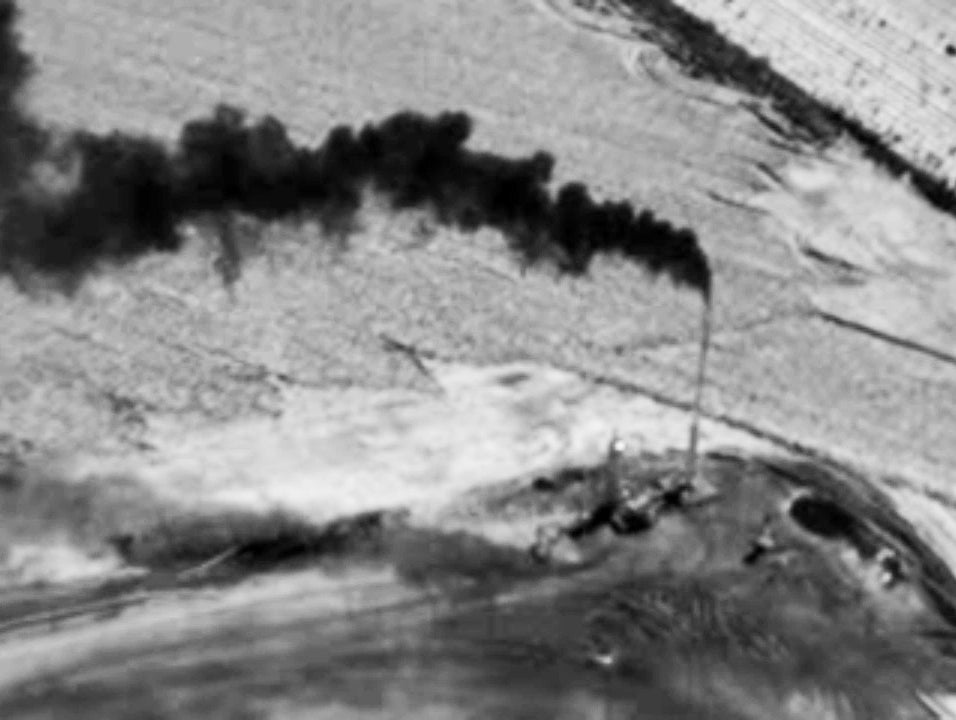
 A brand new research out right this moment within the journal Science finds that climate-warming methane emissions from flaring, the follow of burning off gasoline somewhat than capturing it for productive use, are 5 instances greater than authorities estimates — primarily as a result of unlit and malfunctioning flares. Researchers conclude that flares are combusting at a 91% effectivity charge, considerably decrease than the 98% effectivity charge that’s assumed by operators and policymakers.
These findings verify that our present environmental requirements aren’t adequately controlling this air pollution supply and underline the necessity for pressing regulatory motion from the Environmental Safety Company and Bureau of Land Administration to restrict air pollution and waste from flaring.
Shedding mild on the issue
The research, led by researchers on the College of Michigan, checked out flaring throughout three main U.S. oil and gasoline basins that collectively signify 80-90% of flaring nationwide. Scientists carried out 13 flights by means of these oilfields, sampling air downwind of flaring websites to find out how successfully flares have been working.
The prevalence of unlit or malfunctioning flares and the discovering that common flaring effectivity is barely 91% — versus the assumed 98% — level to rather more methane being emitted from flaring than beforehand thought. In truth, the College of Michigan estimates that poor flaring efficiency is creating extra methane air pollution with the identical local weather influence yearly as three million automobiles.
New research confirms flaring is a nationwide downside requiring pressing motion Click on To Tweet
Fortuitously, some vitality producing states, together with New Mexico and Colorado, have carried out guidelines to finish routine flaring, a follow that creates pointless methane air pollution and represents a big waste of vitality sources.
However these state efforts alone is not going to be sufficient to deal with the difficulty nationwide, and over 80% of the nation’s flaring downside is concentrated in simply two states — Texas and North Dakota. Neither state has taken ample steps to curb flaring or flaring emissions — putting the U.S. among the many high 5 flaring international locations on the planet.
However the research additionally recognized three main methods to scale back these emissions and mitigate the flaring downside:
- Decreasing the overall quantity of flaring exercise by constructing from main state necessities and finish air pollution from routine flaring.
- Growing flare effectivity, that means working to amp up operational requirements resembling flare upkeep.
- Decreasing the quantity of unlit flares.
The shortage of flaring controls by the nation’s largest flaring states makes it clear that the EPA and BLM have to step up and embrace measures to finish air pollution and waste from routine flaring of their forthcoming nationwide regulatory proposals.
A historical past of poor efficiency
This research is only one of a number of research which have discovered equally egregious emissions from flares. A latest helicopter survey achieved by researchers at EDF discovered that one in ten flares within the Permian Basin have been unlit or malfunctioning, and collectively releasing not less than 300,000 metric tons of unburned methane into the air.
This quantity of waste comes at an enormous value. Power Data Administration information signifies that the US wastes roughly $1 billion of gasoline on flares annually.
In the meantime, on public lands over $400 million of gasoline was vented or flared in 2019 alone. That interprets to roughly $50 million in misplaced income and taxpayer sources. Taxpayers for Frequent Sense present in a latest report that 82% of all gasoline losses on federal lands have been as a result of flaring.
There are, nevertheless, broadly obtainable and cost-effective options to routine flaring. A latest Rystad value evaluation exhibits that many of those fixes aren’t simply reasonably priced for operators, however may even flip them a revenue.
A possibility for change
The science has as soon as once more affirmed that addressing routine flaring is important to curbing local weather air pollution and defending public well being. This research illustrates that nationwide, malfunctioning and unlit flares are a large supply of methane emissions and co-pollutants that put our communities in danger.
It is a downside that main states, like Colorado and New Mexico, are exhibiting the best way on, and that the worldwide group is demanding motion on. Simply this summer season the U.S. and EU launched the International Methane Pledge Power Pathway, which requires nations to finish routine flaring as quickly as potential and by 2030 on the newest.
We want robust EPA and BLM requirements to scale back methane air pollution and waste from flares nationwide.


0 Comments